

A catalog photo cannot answer every question
SportVital has a clear front-view photo of a trail shoe, yet customers still ask about grip, fit and suitable terrain. In this fictional example, the shop prepares ads that answer one question at a time.
Start with the actual shoe
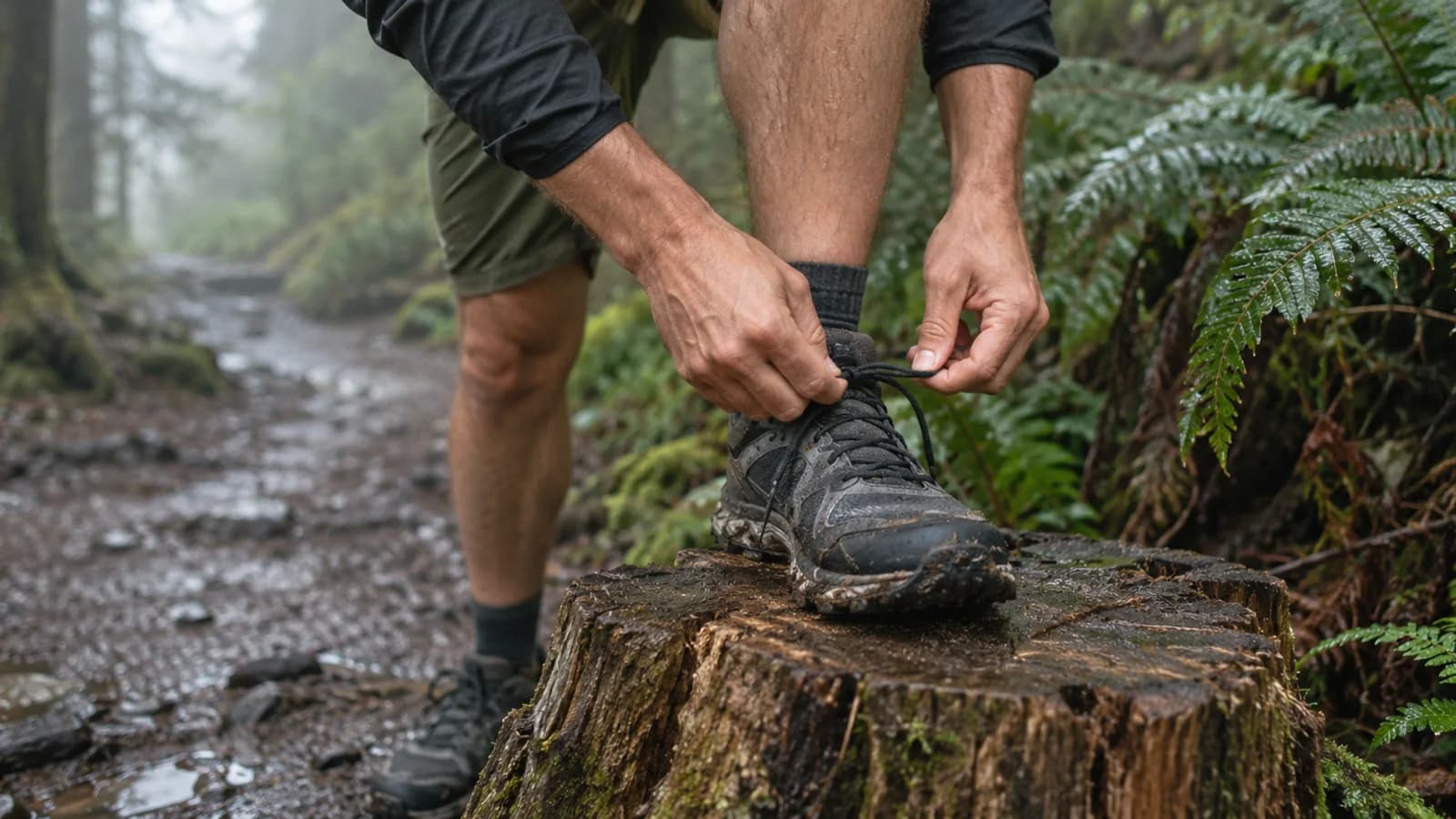
The team collects approved photos, measurements, materials and the manufacturer’s description. Its brief lists features it can support with facts. Showing a runner on a wet trail must not imply that the shoe is waterproof.
Give each version a clear purpose
One draft shows the tread, another shows a plausible trail setting and a third answers a sizing question. AI helps the team explore these approaches while keeping the product, offer and linked page the same.
Check each visible product detail
A staff member compares each version with the real shoe. The sole, stitching, proportions and color must match. The team rejects images that invent a feature or alter the product, even when they look attractive.
Test one clear change
The shop chooses two approved versions and records what it wants to learn. It uses a controlled ad experiment where available and checks whether the sample is large enough. A few early clicks warrant closer observation, not a declaration of a winner.
Follow shoppers beyond the click
Alongside ad results, the team reviews product-page visits, items added to carts and purchases. Returns and sizing questions matter too. Attention alone does not make an ad useful if it leaves shoppers confused.
Keep references for the next set of ads
SEENALYZE AI gives the team a place to prepare visuals and content from its brand guidance. The shop checks product accuracy. Each ad should connect a real item with a clear customer question and a message the team can test.
Legal notice
This is an illustrative workflow. The business, people, examples, and outcomes are fictional and do not represent a typical customer result.